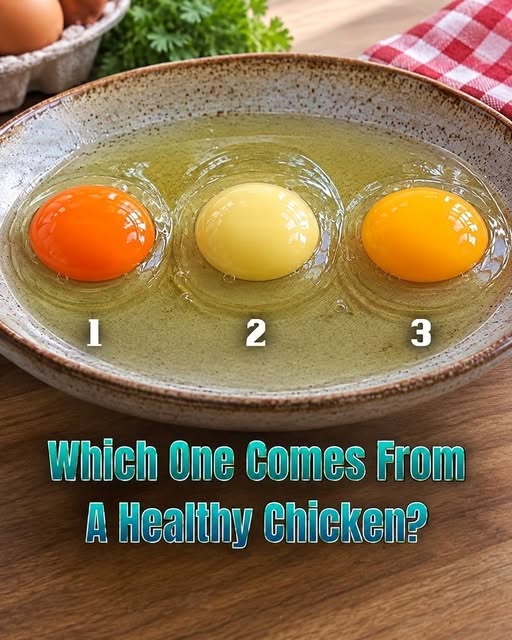
And the reason has a lot to do with what the hen ate.
Why Are Some Egg Yolks So Orange?
Yolk color is influenced largely by pigments in the hen’s diet.
Feeds containing yellow grains, green plants, and other pigment-rich ingredients can produce yolks ranging from pale yellow to deep orange. USDA guidance specifically notes that diet can produce substantial differences in yolk pigmentation.
That means a bright orange yolk can certainly tell you something about the hen’s feed.
But it doesn’t tell you the whole story.
A darker yolk isn’t automatically proof that the hen was healthier, better cared for, or raised under superior conditions.
Likewise, a pale yolk isn’t automatically a sign that something is wrong.
So Which Egg Is the “Healthiest”?
If you’re playing the visual guessing game, there’s actually no reliable way to identify the healthiest hen from yolk color alone.
That’s the trick.
Egg 1, 2, and 3 could all come from healthy hens.
Their yolks could simply reflect differences in diet.
Researchers have also found that factors such as the hen’s diet, age, strain, and rearing environment can influence the nutrient composition of eggs. However, some measured differences may be relatively small from a human nutrition perspective.
So the most colorful egg isn’t automatically the winner.
The Color Can Still Tell You Something
That doesn’t mean yolk color is meaningless.
It can provide a clue about the pigments present in the hen’s feed.
Carotenoid-rich ingredients, for example, can contribute to stronger yellow or orange pigmentation. Research conducted by USDA scientists has also demonstrated that changing a hen’s diet can affect yolk color and certain components of the egg.
But there’s an important distinction:
A clue isn’t the same thing as a complete nutritional test.
That’s where the popular belief about “dark orange yolks” can become misleading.
What Should You Actually Look For?
If you’re choosing eggs at the store, don’t judge the carton solely by the color of the yolk—especially because you usually won’t see the yolk until you’ve already bought the eggs.
Instead, pay attention to the information available on the carton.
Depending on where you live, labels may provide information about production methods, grading, size, or other characteristics.
In the United States, for example, USDA grading standards evaluate factors such as albumen quality, yolk condition, cleanliness, and shell characteristics rather than simply rewarding a darker yolk.
Proper storage and handling also matter.
An attractive yolk doesn’t replace good food-safety practices.
What About Pale Yolks?
This is where appearances can be particularly misleading.
A pale yellow yolk may not look as dramatic on a plate, but that doesn’t automatically make the egg inferior.
The hen’s feed can naturally produce different shades.
Two eggs can look noticeably different while both being perfectly normal.
So if you’ve ever cracked an egg and wondered why its yolk wasn’t the deep orange color you expected, there’s no reason to assume something is wrong based on color alone.
And What About the Deepest Orange Yolk?
There’s nothing wrong with preferring a richly colored yolk.
For many people, the appearance makes a dish look more appealing.
But it’s important not to turn a visual preference into a health claim.
A beautiful orange yolk can be delicious.
It can indicate a diet containing more pigments.
It can even be associated with differences in certain nutrients in some circumstances.
But color alone cannot tell you whether the hen was “healthier.”
That’s simply too much information to extract from one visual characteristic.
The Real Answer to the Challenge
So, which egg should you choose?
You can’t identify the healthiest hen from these three yolks based on color alone.
If someone tells you that the darkest orange yolk automatically proves the healthiest chicken, be cautious.
The reality is more complicated—and actually more interesting.
Egg yolk color is influenced by diet. Egg composition can be influenced by several factors. And the conditions under which hens are raised involve much more than what the yolk looks like after you crack the shell.
So next time you see three eggs with different-colored yolks, go ahead and pick your favorite.
Just don’t assume that the brightest one has won a scientific health contest.
Sometimes, the most eye-catching answer isn’t the most accurate one.