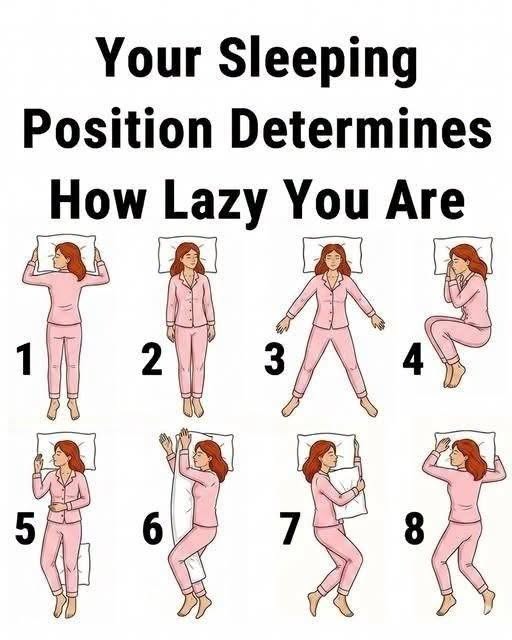
Why Do We Have a Favorite Sleeping Position?
People don’t usually spend much time consciously deciding how they will sleep.
Instead, the body gradually settles into a position that feels comfortable.
Your preferred posture can be influenced by your mattress and pillow, physical discomfort, health conditions, and simple habit. Sleep position can also change during the night, so the position you remember falling asleep in may not be the one you have when you wake up.
That makes sleeping position more complicated than a simple personality label.
Side Sleeping Is Extremely Common
If you sleep on your side, you’re certainly not unusual.
Side sleeping is one of the most common positions and can help some people maintain comfortable spinal alignment. It may also be useful for people whose snoring or obstructive sleep apnea becomes worse when they sleep on their backs.
For people with lower back discomfort, sleeping on the side with the knees slightly bent and a pillow between the knees may help reduce strain.
But comfort still matters. A position that works well for one person may create pressure on another person’s shoulders or hips.
What About Sleeping on Your Back?
Sleeping on your back can make it easier to keep the head, neck, and spine in a relatively neutral position when the mattress and pillow provide appropriate support.
For some people, this can be comfortable and may reduce pressure on certain joints.
There is a catch, though.
For some people, sleeping flat on the back can worsen snoring or symptoms of obstructive sleep apnea. It can also aggravate heartburn for some individuals.
So a position that feels perfectly comfortable isn’t necessarily ideal for everyone.
And Then There’s Stomach Sleeping
Sleeping on your stomach is another common variation, although it is generally less popular than side or back sleeping.
The main challenge is that keeping your head turned to one side for long periods can place additional strain on the neck. Stomach sleeping can also make it harder to maintain comfortable spinal alignment.
That doesn’t mean everyone who sleeps on their stomach needs to change immediately.
If you wake up comfortable and well-rested, your preferred position may simply work for you. Persistent pain or other symptoms are a different matter.
Does Sleeping Position Reveal Your Personality?
This is where popular articles sometimes go too far.
You may have seen claims that people who sleep in one particular position are naturally confident, while people who curl up are supposedly more sensitive or those who stretch out are more independent.
These descriptions can be entertaining.
But they shouldn’t be treated as scientific personality assessments.
A person’s sleep posture can be influenced by physical comfort, habits, health, bedding, and environmental factors. There isn’t enough evidence to use someone’s sleeping position as a reliable way to determine their personality.
Your Pillow and Mattress Matter Too
Sometimes the position isn’t the real issue.
Your pillow affects how your head and neck are supported. Your mattress also influences how your body is positioned and where pressure is placed.
A pillow that is too high or too low may leave your neck in an uncomfortable position, while an unsuitable mattress can contribute to pressure or poor support.
Small changes to your sleep setup can therefore make a noticeable difference.
When Your Sleeping Position May Be Worth Paying Attention To
Your usual position isn’t something you need to worry about simply because it is different from someone else’s.
However, pay attention if you regularly wake up with significant neck or back pain, experience persistent heartburn at night, or notice loud snoring or breathing interruptions during sleep.
Those symptoms may have causes that deserve discussion with a healthcare professional.
In particular, repeated pauses in breathing during sleep can be a sign of sleep apnea and shouldn’t be dismissed as simply being a “bad sleeper.”
The Interesting Part Isn’t Your Personality
Your sleeping position probably won’t reveal whether you’re an introvert, an extrovert, a natural leader, or a romantic.
But it can provide clues about something much more useful: what your body finds comfortable and how your sleep environment supports you.
The position you naturally choose may have developed from years of habit.
It may change because of an injury, pregnancy, a new mattress, a different pillow, or another change in your physical needs.
And sometimes, you simply move around until you find the position that lets you sleep.
So, Why Do You Sleep That Way?
There may not be one mysterious reason.
Your favorite position could be a combination of habit, comfort, body support, and individual preference.
Instead of asking what your sleeping position says about your personality, a more useful question might be:
Does the way you sleep leave you feeling comfortable and rested when you wake up?
If the answer is yes, your body may already have found a position that works for you.