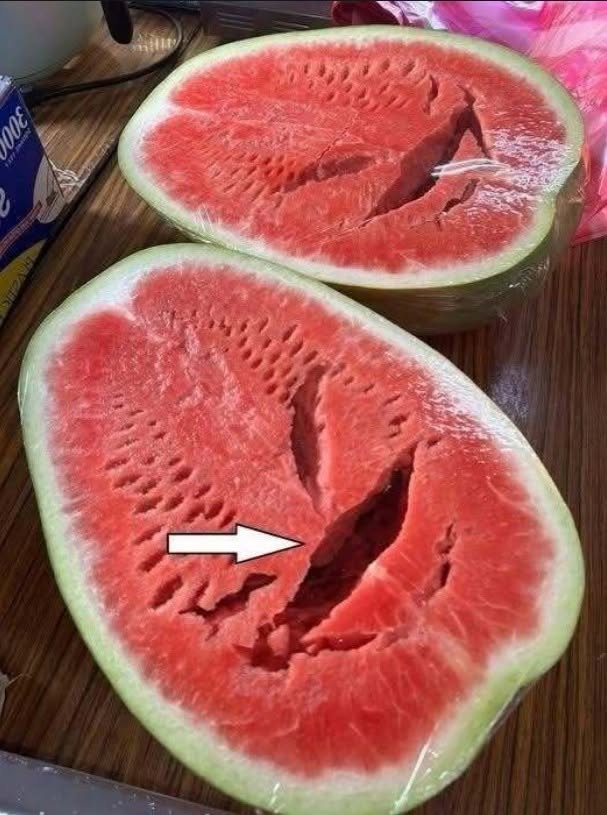
Finding cracks or unusual spaces inside a freshly cut watermelon can be surprising. Some online posts suggest these changes indicate chemical contamination, but internal cracking does not automatically mean a watermelon is unsafe to eat. The fruit’s appearance, smell, texture, storage conditions, and handling all help determine whether it should be consumed.
Understanding the possible causes of these changes can help consumers make informed decisions without unnecessary concern.
Why Do Watermelons Develop Internal Cracks?
Internal cracks, hollow spaces, or uneven textures can develop for several reasons. Growing conditions, irregular water availability, rapid fruit development, and natural variations in the fruit may contribute to these defects. Physical damage during harvesting or transportation can also affect its quality.
Continue reading on next page…