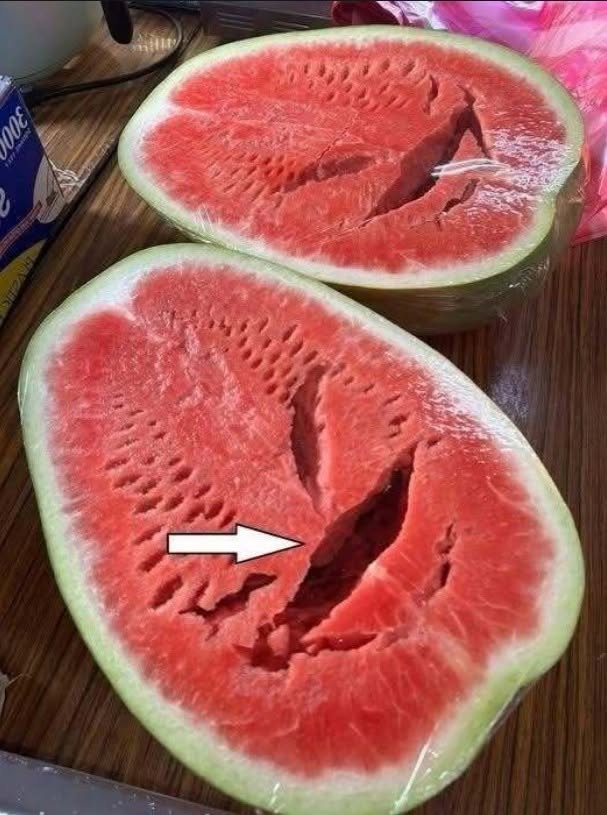
Some watermelons may develop hollow areas inside, a condition commonly known as hollow heart. This is a physiological defect that can occur during fruit development. Although it may affect the appearance and texture of the flesh, it does not automatically indicate contamination or spoilage.
However, the appearance of a watermelon alone cannot confirm that it is safe to eat. Other signs and the way the fruit has been stored should also be considered.
Do Internal Cracks Mean a Watermelon Contains Chemicals?
Claims linking cracked watermelons directly to chemical contamination should be treated cautiously. An internal crack is not reliable evidence that a growth regulator or another chemical has been used.
Chlorfenuron is a plant growth regulator that has been used in some agricultural settings to influence fruit development. Its approval and permitted uses vary by jurisdiction. However, there is no sound basis for concluding that a watermelon contains chlorfenuron simply because its flesh has cracks or hollow spaces.
Consumers concerned about pesticide residues can consult food-safety information from their local agricultural or public health authorities. Buying produce from reputable sellers and following proper washing, cutting, and storage practices are sensible precautions.
How Can You Tell Whether a Watermelon Is Still Fresh?
Before cutting a watermelon, look for a firm rind without extensive damage, deep cuts, or areas that appear rotten. A watermelon that feels heavy for its size may contain plenty of water, while a pale yellow or creamy field spot can be a normal sign of ripeness.
After cutting, examine the flesh carefully. Fresh watermelon generally has a clean, mildly sweet smell and a moist texture. Depending on the variety and ripeness, its color and firmness may vary.
Internal cracks alone do not necessarily mean the fruit must be discarded. If the flesh otherwise looks and smells normal and the watermelon has been handled and stored safely, the defect may simply affect its texture.
When Should You Throw a Watermelon Away?
It is safer to discard a watermelon if it shows clear signs of spoilage, including:
- A sour, fermented, or otherwise unpleasant smell.
- Slimy or unusually mushy flesh that suggests deterioration.
- Visible mold or extensive decay.
- Unusual discoloration accompanied by other signs of spoilage.
- Evidence that the cut fruit has been stored improperly or left at room temperature for too long.
Do not taste a questionable watermelon to determine whether it is safe. Harmful microorganisms may be present even when food looks or smells normal, so sensory checks cannot guarantee safety.
How to Handle and Store Watermelon Safely
Wash the watermelon under running water before cutting it, even if you do not plan to eat the rind. This helps prevent dirt and microorganisms on the outside from transferring to the flesh through a knife.
Use clean hands, utensils, and cutting surfaces. Refrigerate cut watermelon promptly in a covered container, and avoid leaving it unrefrigerated for extended periods. As a general food-safety guideline, perishable cut fruit should not remain at room temperature for more than two hours, or more than one hour when the temperature is above 90°F (32°C).
Follow local food-safety recommendations if the fruit has been exposed to heat or if you are uncertain about its storage history.
The Bottom Line
Cracks inside a watermelon are not automatically a sign of chemical contamination or a health hazard. They can result from natural variations during fruit development and may affect the fruit’s appearance or texture.
The most important considerations are whether the watermelon shows signs of spoilage and whether it has been handled and stored properly. When there are clear signs of deterioration or doubts about its safety, discarding it is the prudent choice.
By evaluating produce carefully and following basic food-handling practices, consumers can make informed decisions without relying on alarming or unverified claims circulating online.