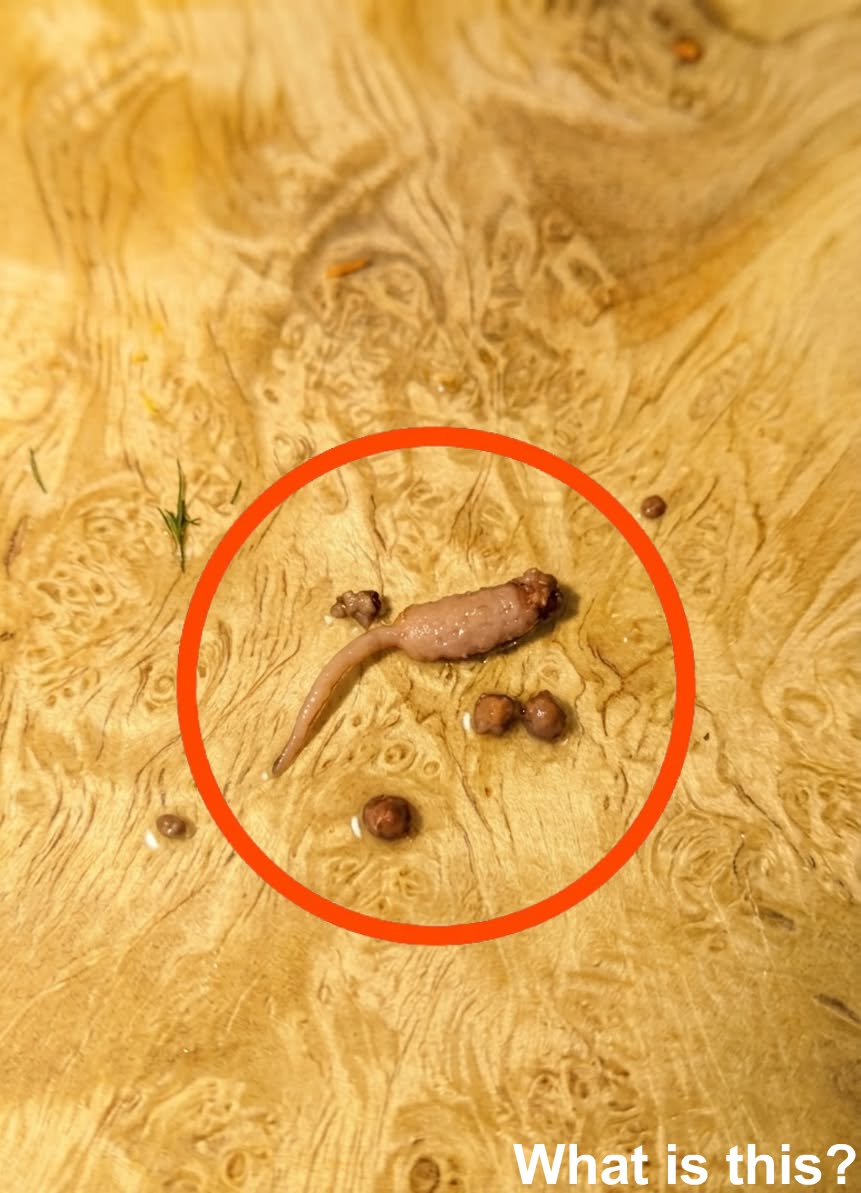
Something Strange Was Found in Cooked Ground Beef — But the Real Explanation May Surprise You
Imagine sitting down for a delicious homemade dinner, only to notice something unusual hiding in the middle of your cooked ground beef. At first glance, it looks like a tiny twisted worm. Its pale, stringy appearance is enough to make anyone pause before taking another bite.
That is exactly the kind of unexpected discovery that can turn an ordinary meal into a moment of confusion and concern.
Before throwing away the entire meal, however, it is worth understanding what might actually be hiding in cooked ground beef. Sometimes, the explanation is far less alarming than the appearance suggests.
Why Does Cooked Ground Beef Sometimes Look Strange?
Ground beef is not made up of perfectly identical pieces of muscle. Depending on the cut and processing, it can contain varying amounts of fat and connective tissue.
When exposed to high temperatures, these different components react in different ways.
Fat can melt, shrink, and collect in unusual shapes. Connective tissue can tighten and curl as it cooks. Small pieces of tendon or gristle may also become more noticeable once the surrounding meat changes texture.
The result can occasionally look like something completely unrelated to food.
A thin, pale strand or twisted piece of tissue can resemble a tiny worm, particularly when surrounded by browned ground beef.
Could That Strange White String Be a Parasite?
This is often the first question people ask when they discover something unusual in their food.
Although certain parasites can be associated with meat, appearance alone cannot determine whether an object is a parasite, connective tissue, or another foreign material.
A pale, curled strand may simply be fat or connective tissue, but it is not possible to confirm that explanation without examining the material.
If something unusual appears in your ground beef, avoid eating it until you have identified what it is.
If you are concerned, take a clear photograph, preserve the sample if possible, and contact the retailer or local food-safety authority for guidance.
What Happens to Fat and Connective Tissue During Cooking?
Heat changes the structure of meat in several ways.
1. Fat begins to melt
As ground beef cooks, its fat softens and renders. Small pieces can separate from the meat and collect into irregular shapes.
2. Connective tissue contracts
Collagen-rich connective tissue changes with heat. Thin strands can tighten, shrink, and curl, sometimes producing unusual shapes.
3. Meat proteins change texture
Muscle proteins contract and change structure during cooking, affecting the appearance and consistency of the finished meat.
These natural changes explain why ground beef can sometimes contain pieces that look unfamiliar or unexpected.
Continue reading on the next page…