Nothing about the day had suggested that the evening would end with an insect investigation.
I had spent hours away from home and returned feeling tired. The apartment was quiet, and all I wanted was to change clothes and get some rest.
The bedroom looked just as I had left it. The blanket was in place, the pillow was slightly crooked, and the soft evening light fell across the floor.
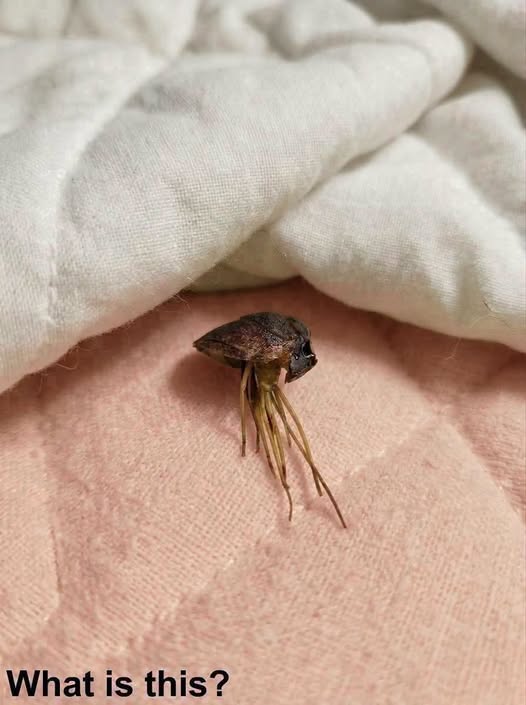
Then I noticed the small creature.
It was not particularly large, but its unusual appearance made it difficult to identify. Its upper body looked like a little hood or shell, while its legs seemed thin and oddly positioned.
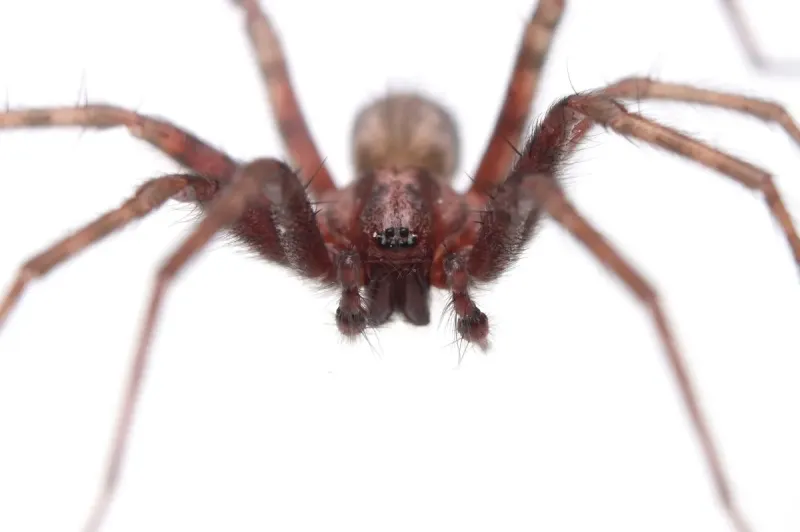
A spider was the first possibility that came to mind. However, the creature did not have the familiar appearance I associated with spiders.
I turned on the bedside lamp to get a better look. The extra light revealed more detail, but it did not immediately solve the mystery.
Rather than touching it or shaking the blanket, I decided to take a few photographs. Having a clear picture would make it easier to compare the insect with reliable identification resources.
Identifying the Unusual Visitor
Looking at the photographs, I began to notice a distinctive feature: the insect had an enlarged structure covering much of its upper body.
After comparing images of different insects, one possibility stood out: a treehopper.
Treehoppers belong to the family Membracidae and are related to leafhoppers and cicadas. They are generally small insects that feed on plant sap, using specialized mouthparts to draw fluids from stems and other plant tissues.
Their most recognizable feature is the pronotum, an enlarged section of the thorax that can extend over the body.
Depending on the species, this structure may resemble a helmet, thorn, hump, or piece of bark. It gives treehoppers some of the most unusual silhouettes in the insect world.
Once I understood what I might be seeing, the creature on the blanket made more sense. What initially looked like an irregular shell was likely part of its natural body structure.
I could not confidently identify the exact species from the description alone. Treehoppers are a diverse group, and many species have similar features. Still, the photographs suggested that this was a very different kind of visitor from the household pests I had initially imagined.
Why Treehoppers Look So Unusual
Treehoppers are fascinating partly because of the variety of shapes found within the group.
Some species have rounded bodies that resemble small bumps on a plant. Others have pointed structures that look remarkably like thorns.
These unusual forms can help the insects blend into their surroundings. When resting on a stem or branch, a treehopper may be difficult for a predator to distinguish from the plant itself.
One well-known example is the buffalo treehopper, which has a distinctive angular profile. Another is the thorn treehopper, whose enlarged pronotum creates a pointed appearance.
<text> </text>
Different species also display a variety of colors and patterns. Some are green or brown, while others have more noticeable markings.
These differences make treehoppers interesting subjects for nature photography and insect observation. They also explain why someone encountering one for the first time might struggle to recognize it.
An insect that looks ordinary on a plant can appear completely unfamiliar when found indoors, especially under artificial lighting.
How Could a Plant-Feeding Insect Enter a Home?
Treehoppers are associated with plants, not beds or mattresses. They do not normally seek out bedrooms, and fabric is not a suitable food source for them.
If one appears inside a home, it may simply have entered by accident.
There are several possible routes:
- An open window or door: A small insect may enter while moving around nearby vegetation.
- Clothing or bags: An insect resting on a plant could accidentally travel indoors on a jacket, sleeve, or bag.
- Cut flowers or garden materials: Plants brought inside may occasionally carry small insects.
- Gaps in window screens: Damaged screens or small openings can allow insects to enter.
Without knowing exactly where the insect came from, it would be impossible to identify the route with certainty.
The important point is that finding one treehopper indoors does not automatically indicate a household infestation. It may simply be an isolated visitor that has ended up somewhere unsuitable.
Is a Treehopper Dangerous to People?
Treehoppers are plant-feeding insects. They use their mouthparts to obtain sap from plants rather than to hunt people or animals.
They are not generally considered a threat to humans, and they do not sting like bees or wasps.
Nevertheless, it is sensible to avoid handling unfamiliar insects directly. Some small creatures can be difficult to identify, and unnecessary contact may injure the insect or cause an unexpected reaction.
It is also important not to assume that every unfamiliar insect found on bedding is a treehopper.
Bed bugs, ticks, spiders, and other insects have different characteristics and may require different responses. A single photograph or a brief description may not be enough to identify an unknown specimen with certainty.
If there are repeated sightings, unexplained bites, or other signs of a possible pest problem, a qualified pest-control professional or local insect-identification service can help determine what is present.
A Simple Way to Remove an Unfamiliar Insect
Once the insect appeared to be a treehopper, there was no reason to panic.
For a small, accessible insect that can be safely contained, a glass and a piece of stiff paper can provide a simple way to move it outside.
The process is straightforward:
- Place a glass or suitable container gently over the insect.
- Slide a stiff piece of paper underneath the opening.
- Keep the paper in place while lifting the container.
- Carry the insect outside and release it near suitable vegetation.
Avoid crushing the insect or using chemical sprays when they are unnecessary.
If the creature is difficult to reach, appears potentially dangerous, or cannot be identified, it is better not to handle it. Seek appropriate professional advice instead.
Afterward, checking the bedding and nearby areas can provide peace of mind. Washing or changing the bedding is also a reasonable personal choice if it helps you feel comfortable.
What Makes Treehoppers Interesting to Scientists?
Treehoppers are more than unusual-looking insects. Their physical features and relationships with plants have attracted scientific interest.
Their enlarged pronotum is particularly interesting because it varies so dramatically between species. Scientists study these structures to better understand insect development, evolution, and how body shapes may help animals survive in their environments.
Some treehoppers also have relationships with ants.
Many species produce a sugary liquid called honeydew as they feed on plant sap. Ants may collect this substance and, in some cases, protect the insects from predators or other disturbances.
These interactions are part of a wider network of relationships found in gardens, forests, and other natural environments.
A small insect resting on a plant can therefore be part of a much larger ecological story.
A Different Perspective on Unexpected Insects
Finding an unfamiliar creature in a bed can be unsettling. Bedrooms are private spaces, and most people do not expect to share them with insects.
However, the first reaction is not always the most accurate one.
An unusual shape does not automatically mean an animal is dangerous. A small insect with long legs is not necessarily a spider, and a single unexpected visitor does not necessarily indicate an infestation.
Taking a moment to observe the creature, photograph it, and seek reliable identification can prevent unnecessary worry.
That does not mean every insect should be approached or handled. Caution is sensible, especially when the species is unknown. But understanding what an animal is can replace uncertainty with useful information.
The treehopper is a good example. Its unusual appearance might seem alarming at first, but its normal life is closely connected to plants and outdoor environments.
The Takeaway: Sometimes Nature Appears in Unexpected Places
The fictionalized discovery of a treehopper under a blanket offers a reminder that the natural world is full of small creatures with remarkable features.
Treehoppers are adapted to life on plants. Their unusual pronotum can make them resemble thorns, buds, or pieces of bark, helping them blend into their surroundings.
Occasionally, an insect may enter a home by accident and end up somewhere unexpected. When that happens, a calm response and careful identification are more useful than immediately assuming the worst.
If you discover an unfamiliar insect indoors, avoid touching it until you know what it is. Take a photograph if possible, compare it with trustworthy identification resources, and seek expert help if there is any uncertainty about its safety.
What first appears to be a frightening mystery may turn out to be an interesting glimpse into nature.
Sometimes, even an ordinary evening can offer an unexpected lesson about the small lives sharing the world around us.