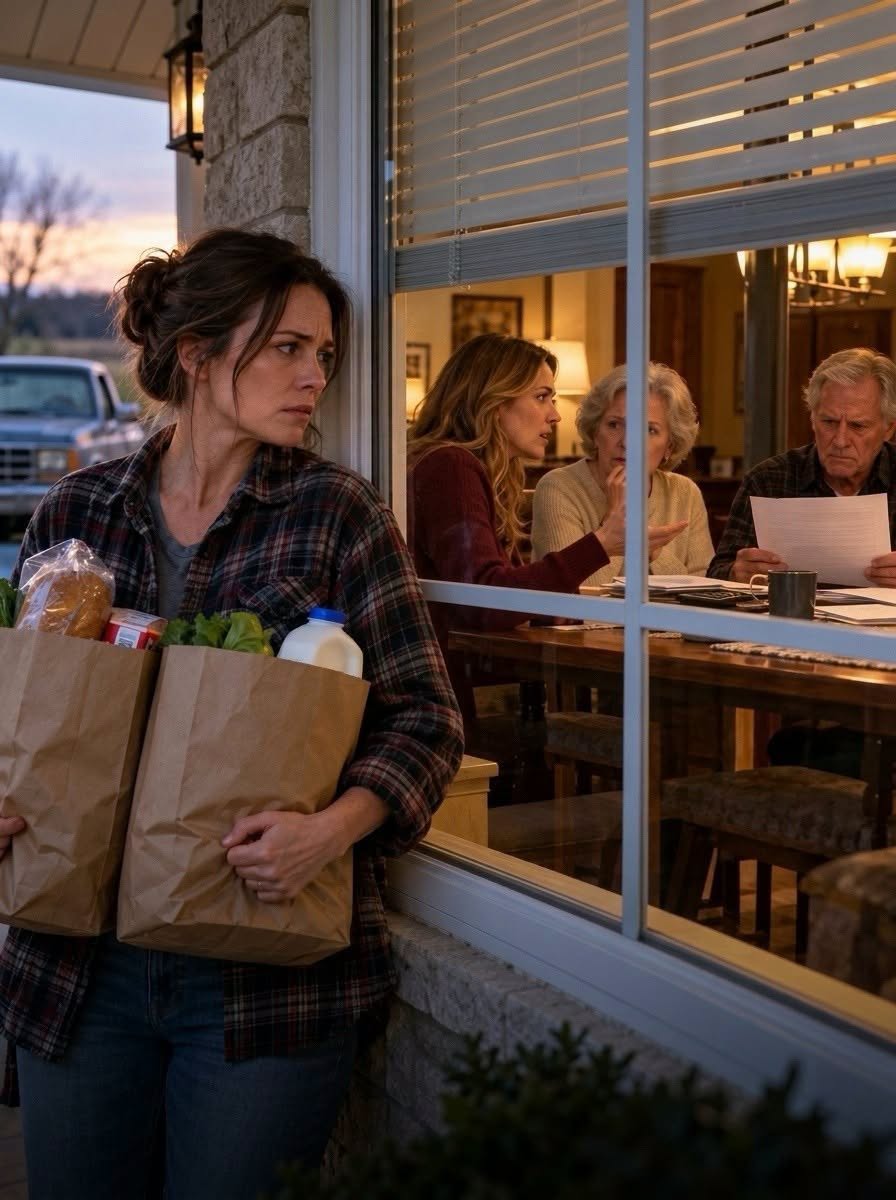
Christmas, on My Terms
In November, David invited me to coffee at a quiet café downtown.
He arrived alone and told me that Sarah wanted to apologize in person, but she understood I might not be ready.
“I’m not ready yet,” I said.
He nodded without arguing.
“Maybe we can have coffee at Christmas.”
His face brightened.
“Really?”
“Coffee,” I emphasized. “Not moving trucks.”
He laughed.
“Definitely no moving trucks.”
Thanksgiving came, and for the first time since Michael died, I wasn’t hosting a large family gathering.
Instead, Ellen and two friends came over. We cooked, ate, and played cards. Nobody rearranged my cabinets, criticized my curtains, or assigned themselves my bedroom.
After everyone left, David called to wish me a happy Thanksgiving.
I heard Linda laughing in the background. Then he asked, “Sarah wants to say hello. Only if you want.”
I looked around my kitchen, at the clean counters, the photograph on the mantel, and my ridiculous pottery bowl.
“Okay,” I said.
“Hi, Kimberly,” Sarah said quietly.
“Hello, Sarah.”
“Happy Thanksgiving.”
“Happy Thanksgiving.”
She paused.
“I won’t keep you. I’m glad David called.”
“So am I.”
“Goodnight.”
“Goodnight, Sarah.”
That was all.
It was enough.
A week before Christmas, I called David and changed our plan.
“Christmas Eve. Dinner.”
There was a long pause.
“At your house?”
“Yes.”
“Are you sure?”
That question mattered.
“Yes,” I said. “Just dinner.”
“And David?”
“Yeah?”
“No overnight bags.”
He laughed.
“Understood.”
On Christmas Eve, light snow fell outside. At four thirty, the doorbell rang.
Not the doorknob turning.
The bell.
I noticed.
David stood on the porch holding a pie. Sarah stood beside him with flowers. Neither carried luggage.
“Hi, Kimberly,” she said nervously.
“Hello, Sarah.”
She lifted the flowers.
“These are for you.”
“Thank you.”
They waited.
I realized they were waiting to be invited inside.
“Come in.”
Only then did they step across the threshold.
During dinner, the conversation was cautious at first. Then David dropped a dinner roll under the table, and Sarah laughed so hard that I joined her.
Something loosened.
After dessert, Sarah wrapped both hands around her coffee mug.
“Kimberly, I don’t want to ruin tonight. But I need to say something.”
I waited.
“I was scared. I thought if I took control quickly, everything would feel stable. But I took control of something that wasn’t mine.”
She looked toward me.
“I treated your generosity like weakness. When you resisted, I tried to make you feel selfish.”
David stared down at his hands.
Sarah wiped one cheek.
“I moved Michael’s picture because it reminded me this wasn’t my house. That was wrong. I’m sorry.”
There was no excuse afterward. No demand for forgiveness. No attempt to make me comfort her.
Just an apology.
I let the silence remain for a moment.
Then I said, “I forgive you.”
Sarah’s face crumpled with relief.
“But forgiveness doesn’t restore the old arrangement,” I added.
She nodded immediately.
“I don’t want it to.”
“Good. I don’t trust you completely yet. Trust takes longer than forgiveness.”
“I understand.”
I believed her enough to keep trying.
Before they left, David handed me a small wrapped box.
Inside was a brass key mounted on a wooden plaque.
I stared at it.
David quickly explained, “It isn’t your key. It’s ours.”
Sarah smiled.
“We signed a lease. A proper lease. In our names.”
“Sixteen months,” David added. “Two bedrooms.”
“No walk-in closet?” I asked.
“No walk-in closet.”
I laughed so hard I nearly dropped the box.
Beneath the key, David had engraved four words:
OUR HOME. OUR RESPONSIBILITY.
I looked at my son and his wife.
“Your father would’ve loved this entire disaster.”
David grinned.
“He would’ve made the closet joke for six straight months.”
“At least.”
When they prepared to leave, Sarah carried the dishes to the kitchen, then stopped.
“Where do these go?”
“Second cabinet,” I said.
She put them there.
Exactly there.
At the front door, David hugged me. Sarah hesitated, then looked at me as if asking permission.
I opened my arms.
She stepped into the hug.
“So we’re okay?” she whispered.
“Better than before.”
She pulled back.
“Really?”
“Before wasn’t okay,” I said. “Now we’re honest.”
She nodded.
“That’s better.”
They left without assuming they could stay. I closed the door and locked it.
Not from fear.
From habit, ownership, and peace.
The House Filled Again
The next spring, David called with a question.
“Our apartment has a tiny balcony. We want plants. What should we buy?”
“Geraniums,” I told him.
There was a pause.
“Dad’s flowers?”
“Yes. Red ones.”
That afternoon, I drove to their apartment for the first time.
It was small, with simple furniture, two mismatched lamps, and a secondhand dining table. Nothing extravagant. Nothing borrowed. Nothing taken.
Three empty planters waited on the balcony.
We spent two hours planting red geraniums. David spilled soil everywhere and blamed gravity. Sarah complained about the mess.
Some things never changed.
Before I left, I noticed a photograph on their bookshelf. It was the same picture of Michael at Lake Erie, but David had printed a new copy. Beside it was a photograph of me standing on my porch, smiling beneath the red geraniums.
“Where did that come from?” I asked.
“Christmas,” David said. “Sarah took it.”
Sarah looked slightly embarrassed.
“You looked happy.”
I studied the photograph.
She was right.
I looked happy.
Not victorious. Not vindictive. Not triumphant.
Happy.
At the entrance, Sarah walked me downstairs.
“Kimberly?”
“Yes?”
“Thank you for not giving us your bedroom.”
I stared at her.
She smiled faintly.
“I’m serious. If you’d given in, I probably would’ve kept taking.”
“Probably,” I admitted.
“I didn’t understand how frightened I was,” she said.
“Frightened people can still hurt other people.”
“I know.”
“Understanding why helps. But it doesn’t erase responsibility.”
She nodded.
“Counseling taught me that.”
We smiled, and she hugged me.
This time, the gesture felt natural because it was chosen, not assumed.
When I drove home, the afternoon sun spread across my dashboard. My house appeared around the final corner: white porch, red geraniums, warm yellow light in the upstairs window.
For years, I had thought home was something you preserved, keeping everything unchanged because love had happened there.
Now I understood differently.
A home could change. Furniture could move. Walls could be painted. Children could leave. People could disappoint you—and sometimes, if they took responsibility, they could learn to return in healthier ways.
Sometimes love meant opening doors.
Sometimes it meant closing them.
Wisdom was knowing when to do each.
That evening, I invited Ellen and a few friends over. Someone brought wine. Someone burned the garlic bread. Ellen cheated at cards and denied everything.
Laughter traveled upstairs, across the yellow walls, through Michael’s workshop, and into every room.
Later, when everyone had gone, I stood in the middle of my living room.
Glasses remained on the coffee table. Crumbs covered one cushion. A blanket lay on the floor.
For once, the disorder didn’t bother me.
I finally understood Michael’s letter.
Fill the rooms again.
I had.
Not by surrendering them, but by living inside them. By choosing who entered, what stayed, and what I was willing to share.
Generosity was still generosity when it had boundaries.
Maybe especially then.
I turned off the downstairs lights and climbed the stairs.
Five years earlier, I had followed a hospice nurse up those steps. Three days after David moved in, I had climbed them to pack his belongings.
Tonight, I climbed them alone.
But loneliness was nowhere near me.
At my bedroom door, moonlight rested across Michael’s old chair.
I smiled.
“No one took it.”
The room answered with peaceful silence.
I slipped beneath my own quilt, in my own room, inside my own home.
And before falling asleep, I thought about that first morning: Sarah’s latte, David’s lowered eyes, and the demand that I empty my bedroom by eleven.
I smiled into the darkness.
The room had never needed emptying.
What finally moved out was my fear that saying no would make me unlovable.
The fear that boundaries would destroy my family.
The fear that protecting myself meant abandoning someone else.
And in the space those fears left behind, something stronger moved in.
Respect.
For my home.
For my history.
For my son.
Eventually, even for Sarah.
But most importantly, for myself.
Outside, the red geraniums swayed in the evening breeze. Inside, the house Michael and I had built settled peacefully around me—full of memories, open to love, and finally, completely, mine.
The lesson I learned was simple: You can love your family without giving them control over your life. A boundary does not have to end a relationship. Sometimes, it is what gives that relationship a chance to become healthier.