The Clint Eastwood crime drama had become a major success, but it also faced criticism from people who believed its portrayal of law enforcement encouraged excessive force.
Hollywood was changing.
And the Oscars were changing with it.
Inside the theater, however, the focus was on the movies.
And there were plenty of remarkable films to celebrate.
One of the biggest winners of the night was The French Connection.
The gritty crime thriller had already made a major impact on audiences and critics, and it went on to win five Academy Awards, including Best Picture.
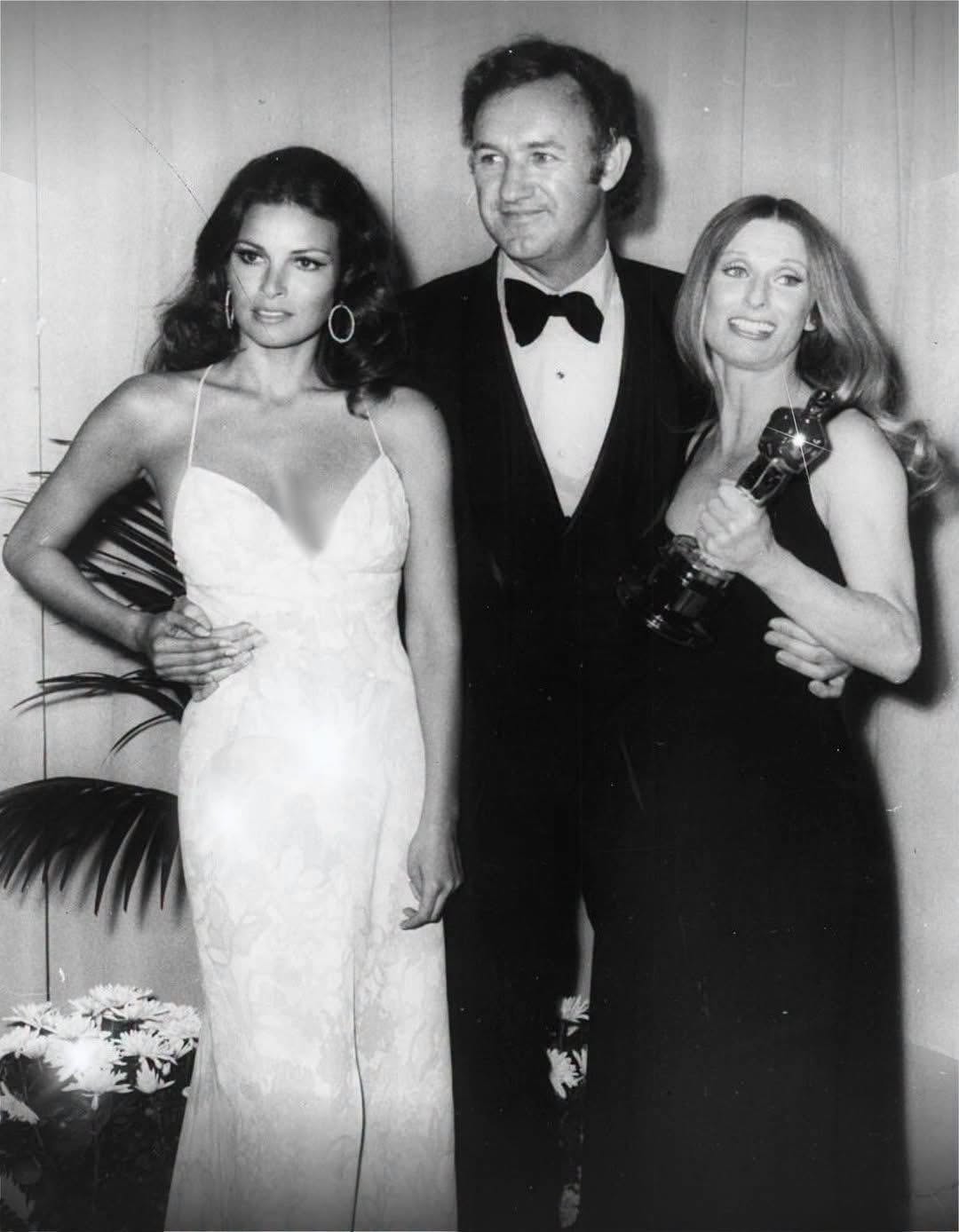
Gene Hackman, who played Detective Jimmy “Popeye” Doyle, won Best Actor.
The performance became one of the defining achievements of his career.
The production itself had been demanding.
Much of the movie was filmed on location in New York, giving it a raw and realistic atmosphere that separated it from many traditional Hollywood productions.
Hackman later reflected on how challenging the experience had been, particularly the outdoor filming and the demanding direction.
Yet the hard work paid off.
When his name was announced as the winner, Hackman was reportedly so overwhelmed that he later admitted he barely remembered walking to the stage.
It was one of the most important moments of his career.
But The French Connection wasn’t the only major film making an impression that evening.
Stanley Kubrick’s controversial and visually striking A Clockwork Orange received multiple nominations.
Fiddler on the Roof was also a major contender, bringing its powerful story and unforgettable music to the Academy stage.
And The Last Picture Show, directed by Peter Bogdanovich, earned widespread recognition, including acting awards for Ben Johnson and Cloris Leachman.
Together, these films represented something important.
Hollywood was becoming bolder.
Filmmakers were experimenting with new styles.
Stories were becoming more complex.
And audiences were being introduced to a different kind of cinema.
The old Hollywood wasn’t completely gone.
But the new Hollywood was arriving.
You could even see that shift in the fashion.
Jane Fonda appeared in a pantsuit rather than the traditional glamorous gown, a choice that reflected the changing attitudes of the early 1970s.
It was a small detail.
But it captured the spirit of the era.
The Oscars were still elegant.
Still glamorous.
But they were no longer exactly the same Hollywood event they had been decades earlier.
And then came one of the night’s most memorable musical moments.
Isaac Hayes took home the Academy Award for Best Original Song for “Theme from Shaft.”
The victory was historic.
Hayes became the first Black composer to win an Oscar in the Best Original Song category.
His success represented an important milestone for both the Academy and the music industry.
But Hayes didn’t simply accept his award and disappear backstage.
He delivered a performance that became one of the evening’s most talked-about moments.
With his distinctive style and unforgettable presence, Hayes brought the energy of Shaft directly to the Academy stage.
It was a performance that felt completely different from the traditional Oscar presentation.
And audiences loved it.
Another unforgettable moment came when an icon from Hollywood’s past returned to the spotlight.
Charlie Chaplin.
At 82 years old, the legendary actor, director, and comedian made a surprise appearance at the ceremony.
Chaplin had spent years living outside the United States after his career became entangled with political controversy during the Cold War era.
Now, he was back.
As he walked onto the stage wearing his familiar derby hat and carrying his cane, the audience immediately rose to its feet.
The applause continued.
And continued.
Nearly 3,000 people were in attendance.
The ovation reportedly lasted around 12 minutes.
It was one of the longest standing ovations in Academy Awards history.
For Chaplin, it was more than an appearance.
It was a remarkable moment of recognition.
The industry that had once watched him become one of the world’s greatest entertainers was now welcoming him home.
The ceremony also featured a fascinating mixture of Hollywood generations.
Established stars and rising performers shared the same room.
Legends from the industry’s past mingled with actors who would go on to define the future.
Names such as Jane Russell, Macdonald Carey, Jane Powell, Jane Fonda, Jack Nicholson, Gene Hackman, Cloris Leachman, and Raquel Welch represented the extraordinary range of talent gathered under one roof.
It was almost as if two versions of Hollywood were meeting in the same room.
The stars of yesterday.
And the stars of tomorrow.
Even the presence of Betty Grable added another connection to Hollywood’s past.
Grable had been one of the most famous stars of the 1940s.
Her iconic pin-up image became a symbol of the era, and she was famously associated with the phrase “million-dollar legs” because her legs were reportedly insured for $1 million.
By 1972, her career was largely behind her, and her appearance served as a reminder of how dramatically Hollywood had changed.
The 1972 Oscars were also notable because of what was happening beyond the theater.
The early 1970s were a time of major cultural and political change.
Hollywood was reflecting those changes.
Movies were becoming more daring.
Actors were taking on different kinds of roles.
Filmmakers were challenging traditional ideas about storytelling.
And the public was becoming more willing to question the entertainment industry.
That made the 44th Academy Awards feel particularly significant.
It was glamorous, but it wasn’t disconnected from the world outside.
It was traditional, but it was also evolving.
It celebrated Hollywood’s history while giving audiences a glimpse of the future.
Looking back today, the 1972 Oscars offer something that modern award shows sometimes struggle to capture.
A sense of transition.
A room filled with legends who represented the past.
New stars who represented the future.
And films that helped redefine what mainstream cinema could become.
The night wasn’t perfect.
There were controversies.
There were protests.
There were debates about the movies and the culture surrounding them.
But perhaps that’s part of what makes the ceremony so interesting.
The 1972 Oscars weren’t simply about trophies.
They were a snapshot of Hollywood at a turning point.
The old studio era was fading.
The New Hollywood era was rising.
And in the middle of it all, some of the biggest names in entertainment gathered together for one unforgettable evening.
From Gene Hackman’s historic victory to Isaac Hayes’ groundbreaking Oscar and Charlie Chaplin’s extraordinary return, the 44th Academy Awards gave audiences moments they would remember for years.
Today, we can look back at photographs and footage from that night and see something special.
A different Hollywood.
A different time.
A different kind of glamour.
We can never return to 1972.
But history gives us the next best thing.
The chance to look back…
and remember what made that era so unforgettable.