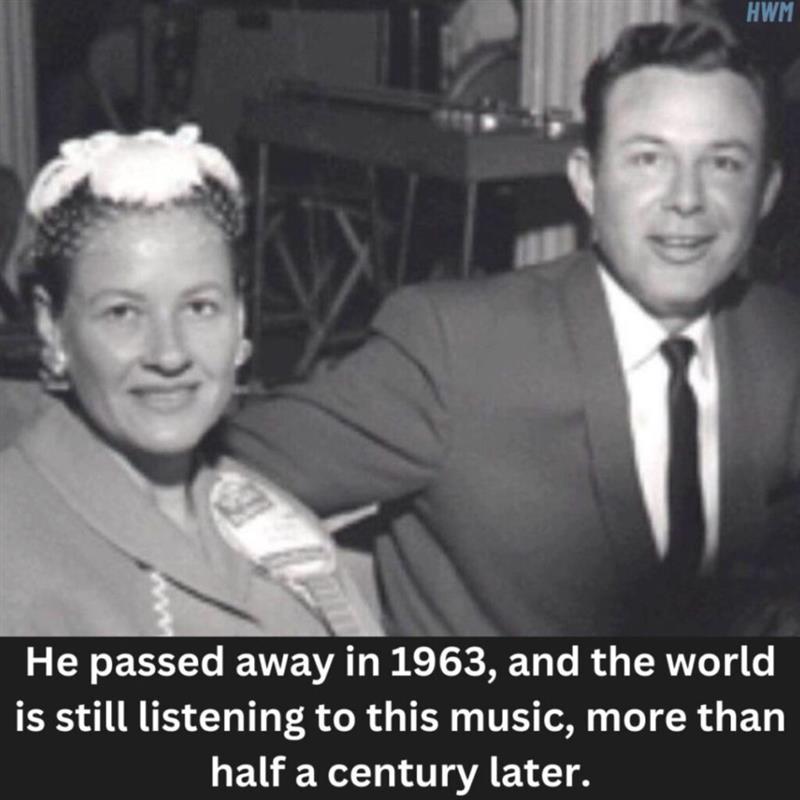
In the history of country music, few voices have carried the quiet emotional weight of Jim Reeves. Smooth, restrained, and deeply expressive, his style helped reshape an entire genre—turning raw heartbreak into something intimate, polished, and universally relatable.
One song in particular became the defining moment of his career and a turning point for modern country music: He’ll Have to Go.
A Voice That Changed the Sound of Country Music
Before becoming a global recording star, Jim Reeves worked in radio, an experience that shaped his understanding of sound and vocal delivery. He learned how to use tone, pacing, and silence to create emotional closeness with listeners—almost as if speaking directly to them through the microphone.
That approach set him apart in an era dominated by more rugged, traditional country styles.
His calm delivery earned him the nickname “Gentleman Jim,” a reflection of both his personality and his musical restraint.
The Story Behind He’ll Have to Go
The inspiration for the hit song reportedly came from a real-life moment observed by songwriter Joe Allison, who overheard a man struggling to speak to a loved one over a late-night telephone call in a noisy bar. One line in particular—“Put your sweet lips a little closer to the phone”—captured the emotional distance between two people trying to connect.
That simple moment became the foundation for one of the most iconic country songs ever recorded.
Studio Simplicity That Created Emotional Power
When Reeves recorded the track, the production was intentionally minimal. Working alongside producer Chet Atkins, the arrangement was designed to stay soft and unobtrusive, allowing Reeves’ voice to remain at the center of the performance.
The result was a recording that felt intimate rather than performative—like a private conversation rather than a staged performance.
That subtlety became one of its greatest strengths.
A Breakthrough That Crossed Musical Boundaries
He’ll Have to Go became a massive commercial success, reaching the top of the country charts and crossing over into mainstream pop audiences. At the time, this level of crossover was rare for country music, which was still largely separated from pop radio.
The song’s success helped define what would later be called the “Nashville Sound”—a smoother, more polished style of country music that blended emotional storytelling with broader commercial appeal.
This shift opened the door for future generations of artists to reach wider audiences without abandoning their roots.
A Lasting Influence on Country Music
The influence of Jim Reeves can still be heard in modern country and crossover music. Artists such as Taylor Swift, Keith Urban, and others have built careers on blending emotional storytelling with mainstream appeal—an approach Reeves helped pioneer decades earlier.
His emphasis on restraint, clarity, and emotional honesty remains a benchmark for vocal performance in country music.
A Tragic End to a Rising Legacy
At the height of his success, Jim Reeves’ life was cut short in 1964 when he died in a plane crash at just 40 years old. The sudden loss shocked the music world and left fans mourning an artist who still had much more to create.
Despite his early passing, his recordings continued to grow in influence, shaping the direction of country music long after his death.
Why His Music Still Feels Timeless
More than six decades later, Reeves’ recordings continue to resonate with listeners. In an era dominated by loud production and fast-moving trends, his calm, intimate style stands out for its simplicity.
Songs like He’ll Have to Go endure because they focus on universal human experiences—distance, longing, and emotional vulnerability—delivered in a way that feels personal and direct.
A Legacy Built on Quiet Power
Jim Reeves proved that emotional impact doesn’t require volume or complexity. Instead, it can come from restraint, clarity, and honesty.
His work helped redefine what country music could be, influencing generations of artists and reshaping the genre’s place in popular culture.
Even today, his voice remains a reminder that the most powerful performances are often the quietest ones—where every word feels like it was meant for just one listener.