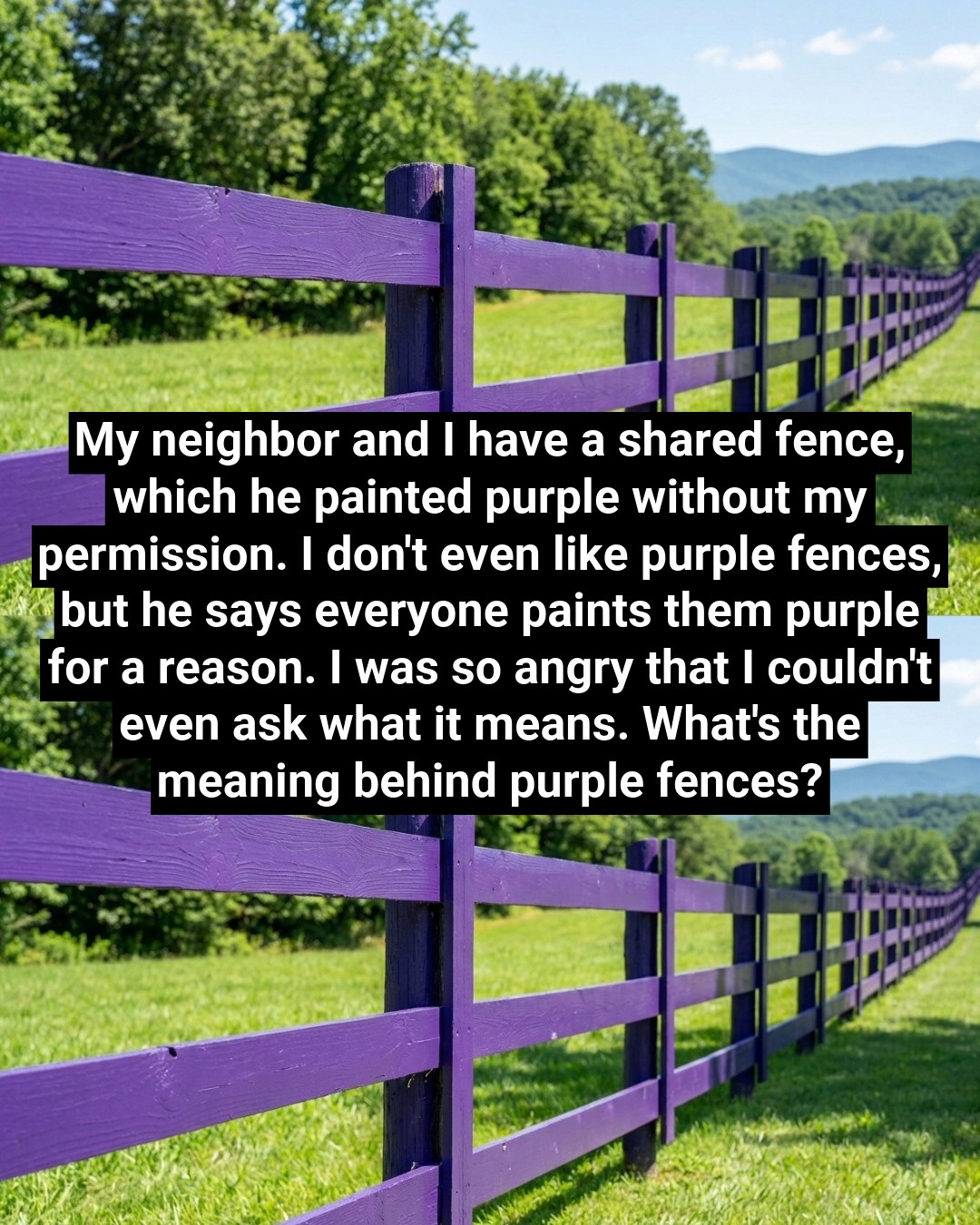
The outdoors is often seen as an open space for exploration—whether hiking remote trails, hunting in rural forests, or simply enjoying quiet time away from urban life. However, in some areas across the United States, visitors may notice something unusual: purple paint markings on trees, fences, or posts.
At first glance, these markings can look like random paint or even environmental tagging. In reality, they often carry legal significance and serve as an official warning under what is commonly known as the Purple Paint Law.
What the Purple Paint Law Means
In several U.S. states, including Missouri, Texas, Arkansas, and Illinois, purple paint is legally recognized as a “No Trespassing” notice. Instead of relying solely on traditional signs, landowners can mark their property boundaries with vertical purple stripes to indicate restricted access.
This system was introduced as a more durable and cost-effective alternative to posted signs, which can be damaged, removed, or fade over time due to weather conditions or vandalism.
Why Purple Paint Is Used
Purple was chosen for a practical reason: it is highly visible in natural environments and stands out against trees, grass, and brush. It is also less commonly found in nature, making it easier to identify even from a distance or in low-light conditions.
The markings are typically required to meet specific guidelines, such as:
- Vertical stripes of a set width and length
- Placed at a visible height on trees, fences, or posts
- Repeated at regular intervals along property boundaries
- Positioned at common entry points to the land
These requirements ensure that the message is clear and legally enforceable.
Legal Consequences of Ignoring Purple Markings
For hikers, hunters, and outdoor visitors, understanding these markings is important. In states where the law applies, crossing into property marked with purple paint is considered trespassing.
Depending on local regulations, penalties may include:
- Monetary fines
- Misdemeanor charges
- Potential criminal records in serious cases
- Increased penalties if other violations occur alongside trespassing
In situations involving refusal to leave or additional illegal activity, consequences may escalate further.
Why Property Owners Use This System
The shift toward paint-based boundary marking reflects a broader trend in property protection and land management. Many landowners prefer purple paint because it is:
- Weather-resistant
- Difficult to remove or damage
- More cost-effective than signage
- Legally recognized in multiple states
As rural land use increases and outdoor recreation becomes more popular, property owners are also more focused on protecting privacy and reducing liability risks.
Why Awareness Matters for Outdoor Recreation
One of the challenges for hikers and travelers is that laws vary by state. Not every region uses purple paint as a legal boundary marker, and the rules can differ slightly depending on local legislation.
This creates a patchwork of regulations, making it important for outdoor enthusiasts to stay informed before entering unfamiliar land.
Legal experts generally advise:
- Always look for boundary markers before entering private land
- Assume purple paint indicates restricted access in applicable states
- Obtain permission when in doubt
- Do not rely solely on the absence of signs
Cultural and Practical Impact
In many rural communities, purple paint markings are widely understood and respected. They are seen as a clear signal that a landowner intends to enforce property boundaries seriously.
Beyond legal meaning, these markings also represent a growing balance between public access to nature and the rights of private landowners.
Final Thoughts
As more states adopt purple paint laws, awareness becomes increasingly important for anyone who spends time outdoors. While forests and trails may feel open and unrestricted, private property laws still apply.
Seeing purple paint should be treated as a clear legal warning—not decoration or environmental marking.
Respecting these boundaries helps ensure safer outdoor experiences and prevents unintentional legal issues.