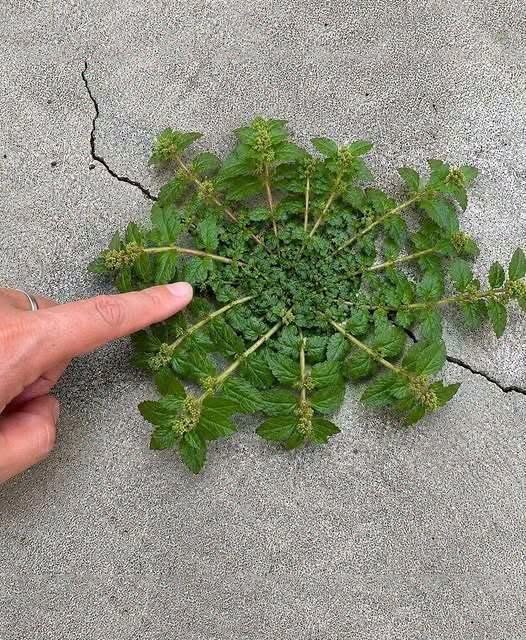
However, traditional use should not be confused with proven medical effectiveness. Research into plant extracts is still different from establishing that consuming the plant is safe or effective for treating a specific health condition.
Why Is It Sometimes Called an “Asthma Plant”?
The name “asthma plant” comes from its traditional association with respiratory complaints. Historical sources describe preparations of Euphorbia hirta being used for issues such as coughs, bronchitis, and asthma.
That does not mean the plant should be used to replace prescribed medicines or professional medical care. Evidence from traditional practice or laboratory research is not enough to establish it as a treatment.
Identification Is Important
Euphorbia hirta can grow in disturbed areas, open ground, grassland, pathways, and other places where small wild plants commonly appear. Its appearance can vary, so identifying a wild plant solely from a brief description or photograph may be unreliable.
This is particularly important with plants in the Euphorbia family, since their milky sap can cause irritation.
The sap of Euphorbia hirta can cause skin irritation, while contact with the eyes may be especially harmful. Guidance from North Carolina State University recommends avoiding ingestion and keeping the plant away from children and pets.
What About Herbal Tea?
Some traditional practices involve preparing Euphorbia hirta as an infusion or decoction. However, there is no universal, medically established household dosage that can be considered appropriate for everyone.
Research has also raised safety questions. Animal studies have reported toxic effects from certain extracts, illustrating why “natural” does not automatically mean harmless.
Anyone considering an herbal preparation should first make sure the plant has been correctly identified and discuss its use with a qualified healthcare professional, especially when taking medicines or managing an existing health condition.
A Plant Worth Knowing, But Not Overestimating
Euphorbia hirta is interesting because it sits at the intersection of traditional knowledge, botany, and modern scientific research.
Its long history in traditional medicine helps explain why it continues to attract attention, while scientific studies are investigating which compounds it contains and what biological effects its extracts may have.
But there is an important distinction between a plant being traditionally valued and a treatment being scientifically established.
So rather than viewing this common herb as a miracle remedy, it is better understood as a plant with an interesting cultural history and an ongoing place in botanical and scientific research.
And if you spot one growing in your yard, the safest approach is simple: identify it carefully, avoid contact with its milky sap, and don’t consume a wild plant merely because it has a reputation in traditional herbal medicine.