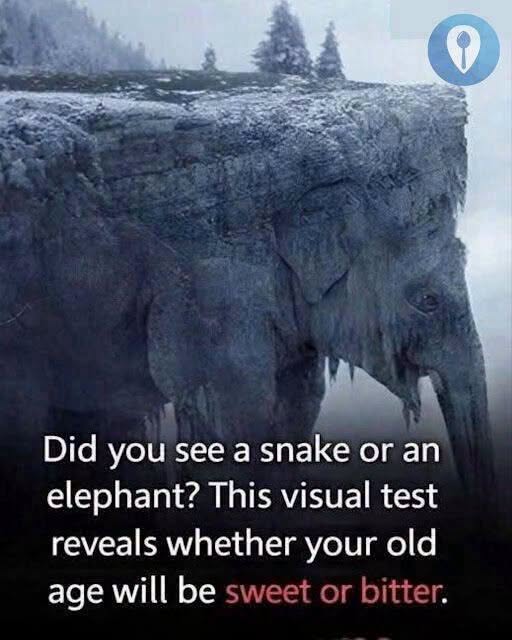
Both reactions are perfectly normal.
Your Brain Makes Fast Visual Decisions
Much of visual processing happens automatically. The brain uses available information along with previous experience and expectations to help interpret what we see.
This is one reason optical illusions can be so convincing. The image itself does not necessarily change, but our interpretation of it can.
Once you notice one possible shape, it can become difficult to switch your attention to another. Even after someone explains the second interpretation, your brain may continue returning to the version you noticed first.
Experience Can Influence What We Notice
Our past experiences can affect how quickly we recognize familiar shapes and patterns.
Someone who is particularly familiar with animals may focus on certain features immediately. Another person may notice overall outlines, shadows, or contrasting areas first.
Mood, attention, surroundings, and expectations can also influence what captures our attention at a particular moment.
That does not mean perception is completely different for every person. Instead, it shows that the brain actively interprets visual information rather than simply recording everything exactly as it appears.
A Similar Effect Happens in Everyday Life
The same basic principle can apply outside visual puzzles.
Two people can witness the same event or hear the same conversation and remember different details. Their attention may be directed toward different parts of the experience, leading them to form different interpretations.
This is one reason misunderstandings can happen even when everyone involved is acting in good faith.
The Illusion Doesn’t Measure Personality
It’s important not to treat a visual puzzle as a scientific personality test.
Choosing the snake does not prove that someone is more creative, analytical, emotional, intelligent, or cautious. Likewise, seeing the elephant first does not establish a particular character trait.
A person’s answer simply reflects which visual pattern their attention recognized first in that particular image.
Try Looking Again
Here’s the fun part: after reading about both possibilities, look at the image once more.
Can you see the other animal now?
You may find that once your brain has identified the second shape, it becomes much easier to switch between the two interpretations. This ability to shift perspectives is one of the reasons ambiguous images continue to fascinate researchers and casual puzzle fans alike.
What the Puzzle Really Teaches Us
The most interesting lesson isn’t about which animal you see first. It’s about how quickly the brain turns incomplete visual information into something meaningful.
We rarely experience the world as a perfect record of every detail. Instead, our minds constantly select, organize, and interpret information.
So the next time an image seems completely obvious, take another moment to look carefully.
You might discover that there is more than one way to see the same picture—and sometimes noticing the alternative is the most interesting part of the puzzle.